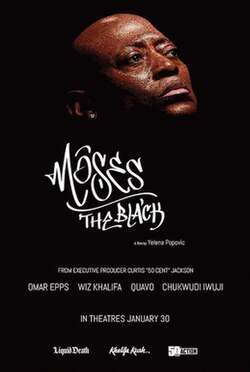
The story of a gangster in modern day Chicago inspired by an incredible story of repentance of the 4th century saint of the same name.
Chuck says:
Yelena Popovic’s “Moses the Black” is a narratively ambitious film that looks at the hard road to redemption through the eyes of two troubled characters. That that live 1500 years apart speaks to the continued struggle we all face in adhering to a righteous path in a world awash in temptation. Justifications for our every desire to be fulfilled are always at hand; the issue is whether we are prepared to pay the moral cost for such things, either today or tomorrow. These are universal questions and Popovic’s willingness to take them on is to be commended. However, she’s punching above her weight as her writing isn’t up to the task of fully exploring these issues in the compelling way they deserve.
Opening in 405 A.D., we are introduced to Moses the Black (Chukwudi Iwuji), an Ethiopian slave who embarked on a life of crime, leading a band of thieves who pillaged and killed with impunity. However, a revelation has prompted him to self-exile, wandering the desert, seeking redemption.
Having just been released from jail, Chicago gang leader Malik (Omar Epps), is following a similar path. Seeking retribution for the murder of his chief lieutenant, his ire blinds him to the fact that he can now start over. His grandmother, unknowingly, throws him a lifeline by giving him a prayer card containing a portrait of Moses the Black, pointing out that despite his troubled beginnings he was able to turn his life around.
Initially taking no note of this, Malik begins to have dreams of Moses, witnessing his struggles and path to salvation. At first, he ignores these visions, but their persistence takes its toll, and the troubled man begins to question his actions and purpose.
Popovic finds the right rhythm alternating between the present and the past. Neither story overwhelms the other, their parallel actions and themes wonderfully complimenting each other. Equally effective are the performances from the two leads. Each role is ripe for emoting but both Epps and Iwuji resist the temptation. Both take a subtle approach in realizing their respective characters’ change of heart, which contributes to driving home the film’s message more effectively.
As well thought out as these two storylines are, the other narrative elements are sorely lacking. Background information regarding Malik’s life on the streets, his rivalry with the competing gang and his history with a cop (Cliff Chamberlain, giving an embarrassing performance) are threadbare at best. Far too often, I was left wondering just how Malik was connected to various characters and why their actions would have such a profound effect on him. For his journey to mean anything, we need to know his sins and how lost he truly is. As it is, we’re left to fill in the gaps, Epps’ soulful performance the only thing generating any empathy with the audience.
Equally vague and frustrating is Straw (Quavo), yet another character who’s sketched in rather than fully rendered. His release from jail signals an escalation in the gang war and it’s implied that his leadership will prove significant. How or why is left a mystery, while the opportunity to have this young man’s experience mirror Malik’s is a missed opportunity. Also left to wither and die is a budding relationship between the veteran gang leader and a tattoo artist (Kierra Bunch) that’s introduced and abandoned.
And while conversations about morality between Malik and his best friend, Mike (Corey Hendrix) are fruitful, they are too few and far between. In the end, despite its solid theme, “Moses the Black” comes off as half a movie, a story in dire need of a comprehensive, incident-heavy rewrite.
2 1/2 Stars