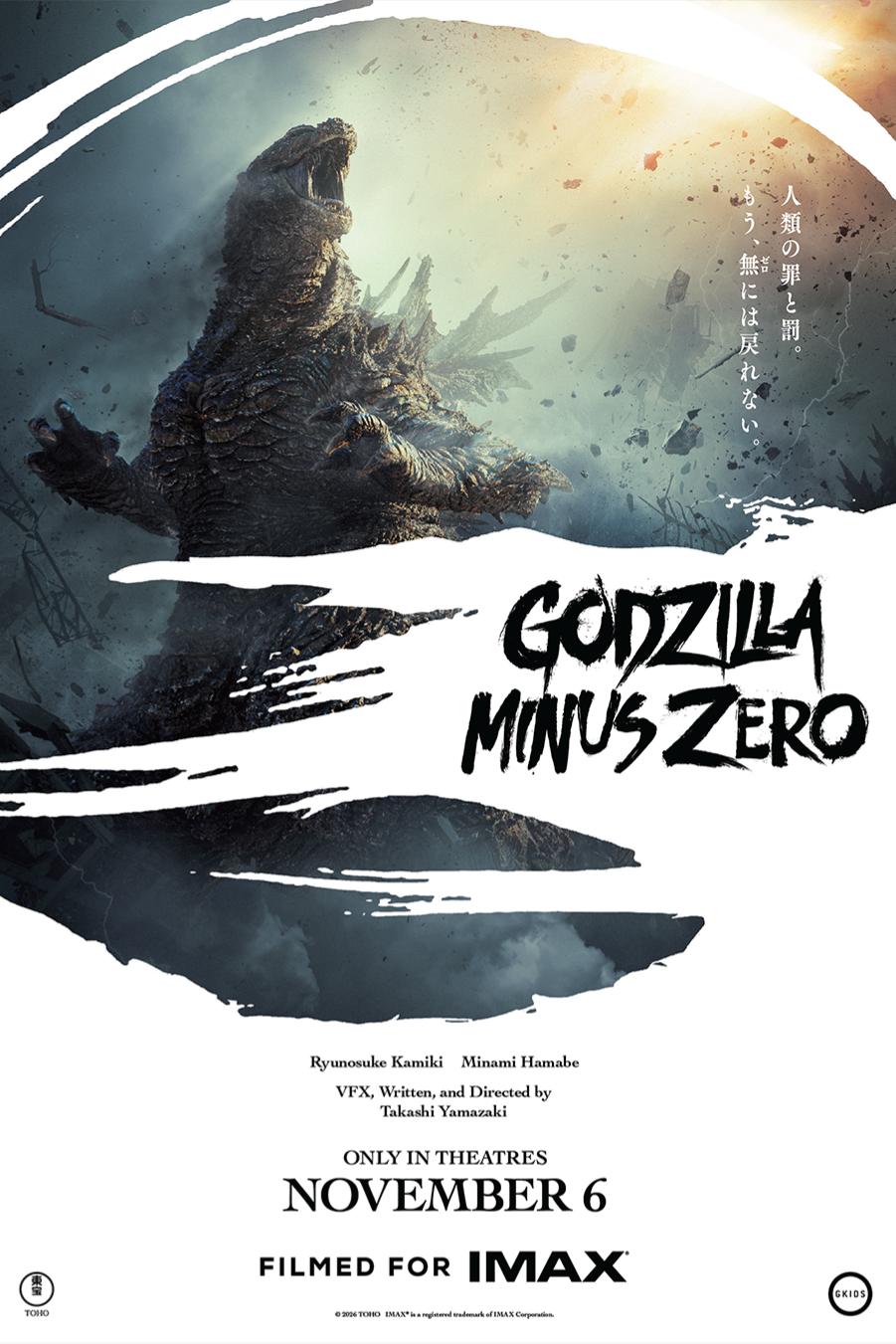
Set in 1949, the Shikishima family confronts a fresh catastrophe two years after surviving their previous ordeal with the legendary monster.
Chuck says:
Much as he did with “Godzilla Minus One,” writer, director and visual effects artist Takashi Yamazaki focuses on the human toll of war and natural disasters in his follow up “Godzilla Minus Zero.” No new ground is broken regarding the structure of the film and this is a sequel in every sense of the word. The narrative beats are the same as the previous entry, many of the conflicts are echoes from the first and the returning characters hardly change from their original motivations or purpose.
Be that as it may, “Zero” remains pertinent as it continues to examine the stigma that remains in Japan as it remains the only nation to suffer the dropping and fallout from an atomic bomb, an event that continues to resonate some four generations later. As its resident metaphor, the titular creature continues to be an effective presence, the weight of this historic disaster resting firmly on its scaly shoulders. That he continues to be a figure of terrifying power and menace is due to Yamazaki’s incredible renderings of him, a creature of the atomic age, lashing out over his cruel fate, indiscriminate in the carnage he wrecks, in the end a sympathetic monster who simply wants to be left alone.
The time is 1949 and the Japanese populace is still recovering from the atomic blasts that destroyed Hiroshima and Nagasaki as well as Godzilla’s initial attack. The makeshift family of pilot Koichi Shikishima (Ryunosuke Kamiki), his now-wife Noriko (Minami Hamabe) and their adopted daughter Akiko (Sae Nagatani) have found a degree of stability and are slowly getting on their feet. However, this is to be shattered by the emergences of another monster.
A giant winged creature is spotted laying waste to the town of Matsumo. Using its atomic breath, wind gusts created by its wings and a magnetic pulse that allows it to raise objects and destroy them by dropping them from great heights, he proves to be a formidable creature. A timely mutation reveals him to be King Ghidorah, the three-headed monster and perhaps Godzilla’s most worthy foe. Yamazaki dispenses with previous origin stories, this creature seen emerging from an asteroid that’s crashed to earth and absorbing any animals that cross his path. The result is a fearsome, hybrid monster able to withstand any human effort to destroy it.
Those at the Disaster Response Bureau, led by Dr. Noda (Hidetaka Yoshioka”), learn all of this the hard way, their efforts to kill it coming to no avail. When the good doctor’s plan to kill Gidorah fails, he’s forced to turn to two colleagues who have radical solutions to this particular monster problem. Aoyama (Masami Nagasawa), an over-eager meteorologist, contends that weather patterns hold the secret to predicting the monster’s movements and suggests lightening be used to combat it. Meanwhile, Professor Murakami (Min Tanaka) wants to employ sonic waves to attract Godzilla and then pit him against Gidorah. Just how he plans on getting the two gigantic beasts to go toe-to-toe is ingenuous yet employs a pair of moral compromises that would give any sane person pause.
This is the first “Godzilla” with an R rating, as Yamazaki insisted upon displaying the effects of the Hiroshima blast as realistically as possible. Murakami is a survivor of that atrocity and in flashbacks we see him finding the remains of his family after the attack. Far from gratuitous, this moment drives home the horror of this weapon and others made in its wake, powerfully underscoring the notion the knowledge to create such things should not be in our hands. It comes as no surprise then that Murakami has a personal agenda relating to corralling Godzilla, one that involves revenge on a massive scale.
Yamazaki examines other ripple effects of the bomb by addressing the biggest plot hole from the previous entry. In that film Noriko pushes Shikishima to safety yet miraculously survives a radioactive blast dispensed by Godzilla. How she was able to do so and its effects on her are explained and serve as a way to put the long-term physical effects of the fallout from the bomb blast into perspective. It also serves as an inventive and convenient plot device.
Yamazaki’s effects work is truly astonishing, these creatures taking on a lifelike appearance that is at once awe-inspiring and terrifying. Meticulous detail is given to their bodies and faces, each fluid and expressive in ways that defy expectations. Filmed with IMAX cameras, the visual compositions and battle choreography demands to be seen on the biggest screen possible to appreciate the grandeur of the kaiju mayhem.
And while the monsters are the draw, the humanity in Yamazaki’s script is what gives it heart. We come to care for all involved as they struggle to contend with forces beyond their control and the seemingly futile effort to start again. Yet, in the end, it’s the resilience shown by Shikishima, Noriko, Akiko, Noda and the rest that stands out. “Zero” winds up being a poignant tribute to the human spirit, undaunted in the face of the inexplicable, tenacious in its efforts to succeed.
3 1/2 Stars