A wounded outlaw finds unexpected mercy in the care of a rancher’s daughter. The hope of love pulls him toward a different life until the law, and his violent past, close in on his new home. Now he must choose the kind of man he’ll become.
Chuck says:
A common lament among older moviegoers is that “they don’t make ‘em like they used to.” This sentiment is a double-edged sword. While the wish for a certain degree of consistent craftsmanship that was part-and-parcel of studio filmmaking is understandable, the more complex subject matter dealt with in modern films has its appeal as well.
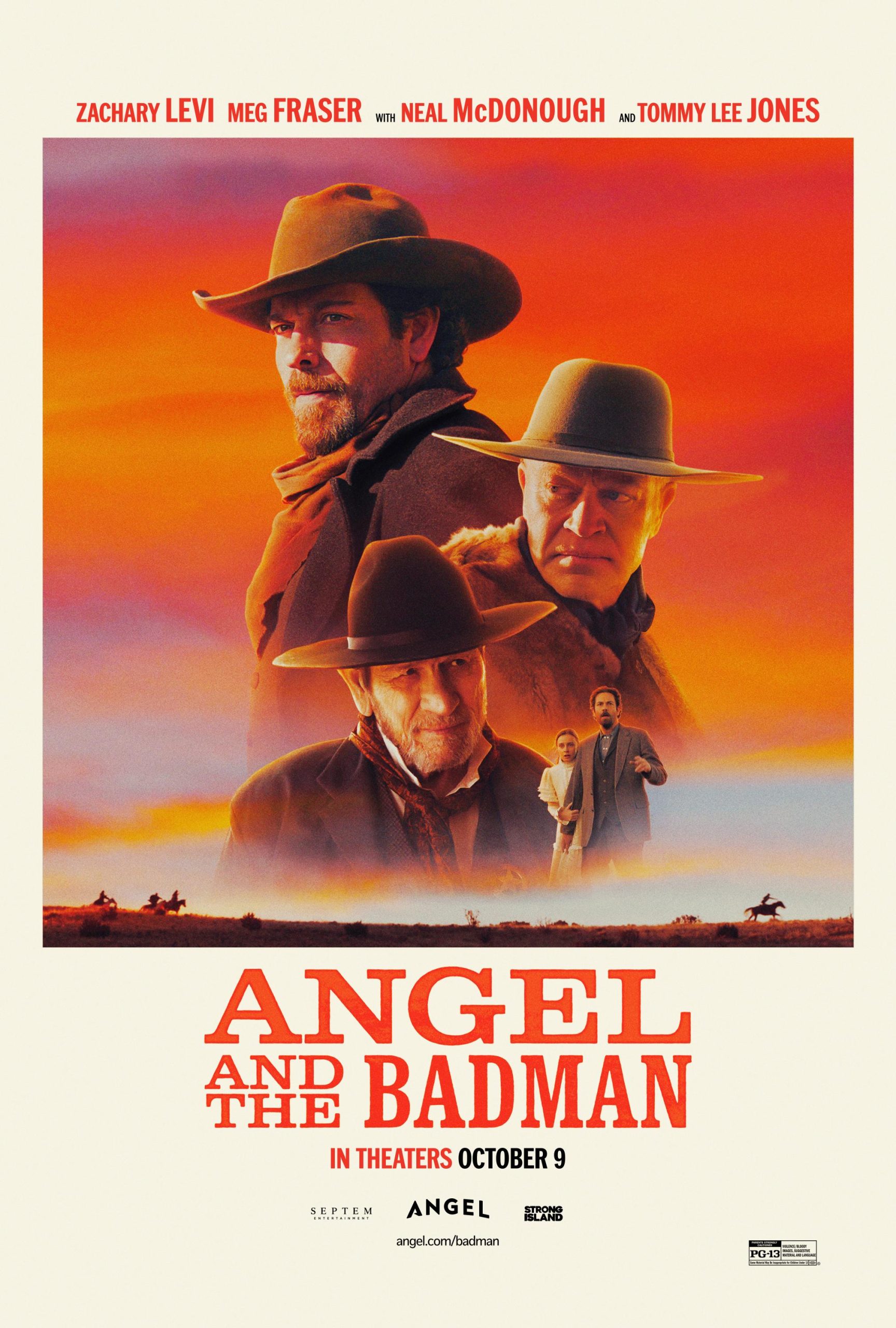
Julio Quintana’s “Angel and the Badman,” a remake of the 1947 John Wayne feature, is a squeaky clean, ham-fisted western of the sort that would be produced in Hollywood’s “used to” age. Painfully obvious in intent, this simplistic movie unabashedly drives home its themes with a sledgehammer, its metaphors obvious, a deft touch absent in its execution. With a decidedly Christian bent, this faith-based oater falls right in line with its distributor, Angel Films’ mission to spread the word far and wide on movie screens around the world.
Quirt Evans (Zachary Levi) is the badman of the title. After lifting a cache of Confederate gold with his partners-in-crime Laredo (Neal McDonough), Tully (Maurice Greene) and Hondo (Jesus Carus), he decides to take the loot himself and leave the trio behind. However, he doesn’t get away scot-free and gets a bullet in his gut for his trouble. Thankfully, fate leads the wounded outlaw to the Worth farm where he’s taken in. The eldest daughter Penny (Meg Fraser) takes an immediate liking to him and sets out to bring him back to health.
And while her initial intent is to minister to his physical wounds, she eventually sets out to address his moral failings. Quoting scripture doesn’t go far but her acts of kindness towards him and others awaken something within the wayward stranger. Before long, Evans find himself looking for ways to be of service to the Worths. However, this dulling of his violent nature may come back to haunt him, once Laredo and the gang find out where he’s been holed up.
The script by Jamie Hernandez, Kevin Townsend and Christopher Tuffin is laden with one obvious piece of dialogue after another. At one point, Penny says, “God sent him to my corral for a reason,” referring to a lost stallion whose crossed her path. Of course, this applies to Evans, as do many other thinly-veiled references to lost souls and purposeless vagabonds. Meanwhile, overt acts of kindness throughout drive home the importance of the Golden Rule, this version of the old west hardly wild, but rather teeming with kindness.
Evans’ internal conflict ends up providing more dramatic dividends than expected. Levi does a capable job portraying the character’s inner struggle, convincing in displaying both his light and dark sides. Fraser does what she can with the one-note role she’s given and, if nothing else, makes just enough of an impression to convince us Evans would turn over a new leaf for Penny.
However, Quintana’s lack of attention to detail dooms the film to having an aesthetic akin to a high school play. The sets are newly built and have not been weathered properly, while everyone’s clothes are clean and neatly tailored. As for the people themselves, they’re so well put together, they look as if they’re able to take two baths a day, three on Sundays. A true period piece, this is not.
The overall moral of the story seems is that in order to get what you want, faith and/or force must be applied. While it’s fine to pray and put your trust in the lord, being able to draw and shoot down a mangy varmint comes in handy as well. “Angel and the Badman” doesn’t take kindly to subtlety. It’s much more comfortable delivering its theme right between the viewers’ eyes.
2 Stars