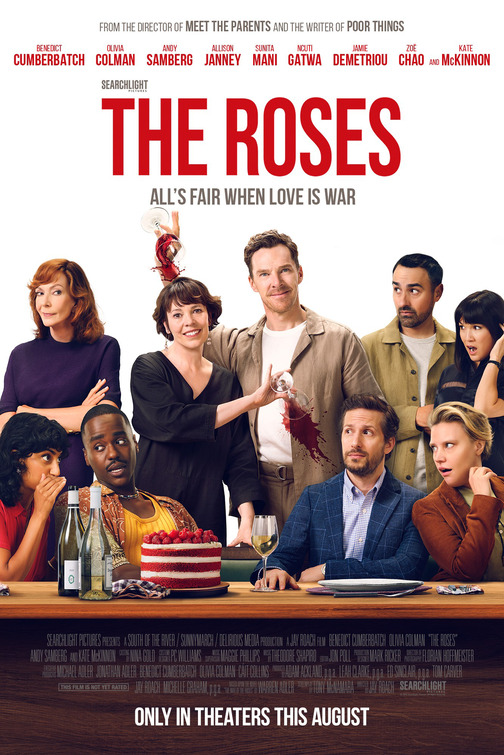
A tinderbox of competition and resentments underneath the façade of a picture-perfect couple is ignited when the husband’s professional dreams come crashing down.
Chuck says:
The acerbic British wit brought to Jay Roach’s “The Roses” holds the film in good stead, the barely veiled sense of bitterness applied by Olivia Coleman and Benedict Cumberbatch the perfect counterpoint to the crasssensibilities of the American characters their co-stars play. It also serves as an apt approach to the darkly comic goings-on that ensue between the titular couple, in this remake of the Michal Douglas – Kathleen Turner vehicle, “The War of the Roses.” As the violence that breaks out between them escalates, so does the pointed nature of the barbs they throw at one another, the result being a hilarious vicarious experience for anyone who’s suffered through the fall out of a romantic relationship gone bad.
On the surface, the casting of Coleman and Cumberbatch may seem a mistake, but it proves to be an inspired pairing. The former is Ivy, a chef who decides to restart her life in America after she’s swept off her feet by dissatisfied British architect Theo (Cumberbatch). He’s looking for a place where his gifts will be appreciated and California calls to them. They settle there, and she raises their two children while he establishes himself as a respected engineer. Years go by, a restlessness sets in, and Ivy opens a quant seaside restaurant called “We Got Crabs.”
What begins as a lark becomes a sensation, Ivy’s radical approach to preparing seafood gaining traction until she winds up opening franchises across the country. That proves fortuitous, as a maritime museum Theo designs ends up being a career-ending disaster. His career in ruins, he becomes a stay-at-home dad, anger setting in over his fate, resentment building over Ivy’s success. It’s only a matter of time before these feelings come to the surface which unleashes a torrent of repressed anger from both parties. It’s not long before the divorce attorneys are put on retainers.
The back and forth between the Roses provide the two stars with multiple occasions to deliver the deliciously cutting remarks Tony McNamara’s script. It’s obvious they’re relishing these scenes, their acidic line readings dripping with disdain. The audacious nature of what they say and do is funny; the twinkle in Coleman and Cumberbatch’s eyes puts it over the top.
They are ably supported by a group of American bores, each of whom are dealing with their own relationship issues. Rory and Sally (Jamie Demetriou and Zoe Chao) are perfectly suited for one another, each as dumb as a post. Yet, despite their dim exteriors, there’s a sense each would drop the other in a heartbeat were someone simply suggest they run away together. Even more effective are Andy Samberg and Kate McKinnon, as long-time marrieds Barry and Amy who are searching for ways to rekindle the spark that initially brought them together. The offhand comments each makes about the other and the pain they carry are as funny as they are accurate.
Yet, there is a moment that strikes home regarding what lies at the core of most relationships. Despite her efforts to bed Theo, the constant insults she lobs at her husband and her vain attempts to spice up their marriage, Amy confesses that when the chips are down, Barry is the only one she knows she can count on. This is telling of so many marriages, the complaints about trifles at hand obscuring the deeply felt sentiments at the foundation of the relationship. It’s an honest moment amidst the escalating chaos, driving home the tragedy of the Roses’ inability to realize this about themselves.
To be sure, there are those who will fail to see humor in the violence that erupts between the Roses, while anyone who’s been through a bitter divorce will likely cringe once Ivy and her steely attorney, Eleanor (Allison Janney) begins to make their demands for a settlement. However, for those who prefer their humor as black as their coffee, “The Roses” will hit the mark. This comedy as smart as it is funny, Roach and McNamara refusing to look away from the absurdity that ensues when “We’ll live happily ever after,” gives way to “I can’t stand the sight of your face.”